
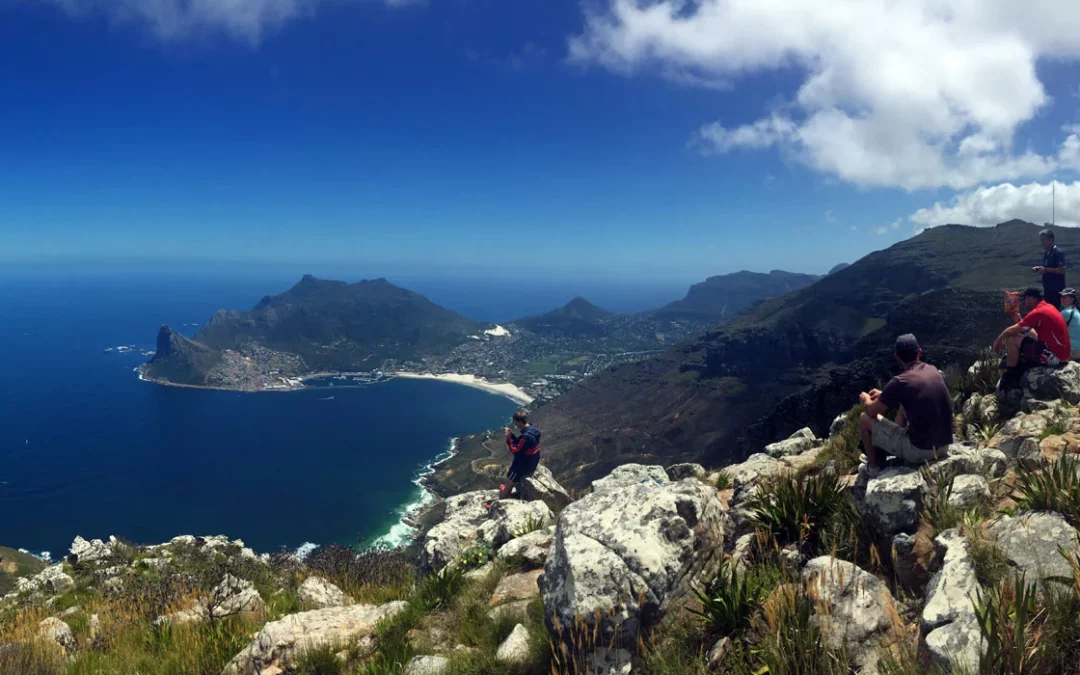
So here’s an honest, neighbourhood-by-neighbourhood breakdown of the best parts of Cape Town to stay in, without the tourism-brochure gloss, and a very strong nudge toward the one most visitors overlook and immediately wish they hadn’t.
The City Bowl: Energy, Culture and Everything at Your Door
The City Bowl sits in the shadow of Table Mountain and is Cape Town’s vibrant centre. Long Street delivers the classic Cape Town experience, great food, live music, rooftop bars and a nightlife scene that doesn’t apologise for itself. The Bo-Kaap with its famous painted houses is a ten-minute walk. So is the Company’s Garden, the South African Museum, and some genuinely world-class restaurants like The Test Kitchen and La Colombe.
If you’re visiting Cape Town for the first time and want to be right in the thick of it, the City Bowl and De Waterkant are excellent choices. Just know that like any city centre, it rewards situational awareness after dark, and peak-hour traffic on the N2 will remind you that urban paradise still has its quirks.
The Atlantic Seaboard: Camps Bay, Sea Point and Clifton
The Atlantic Seaboard is where Cape Town gets properly glamorous. Camps Bay has that famous strip of white sand backed by the Twelve Apostles mountain range, restaurants where the ocean view is part of the price, and a social scene that operates at full volume from November through March. Clifton’s four beaches are, without much debate, among the most beautiful urban beaches in the world, cold water, white sand, dramatic boulders and not a single commercial building in sight.
Sea Point is the more liveable, cosmopolitan version of the Seaboard, a long promenade, an ocean tidal pool, excellent coffee shops and a neighbourhood energy that the glossier areas can’t quite manufacture.
The catch? The Atlantic Seaboard faces due west and catches the Cape’s notorious South Easter full in the face during summer. It’s also expensive, and during high season, relentlessly busy. Spectacular? Absolutely. Relaxing? Not always.
The Southern Suburbs: Constantia, Claremont and Newlands
The Southern Suburbs are where you end up when you’ve been to Cape Town a few times and stopped needing to prove anything. Constantia is all leafy lanes, wine estates, farm stalls and exceptional restaurants like Bistro Sixteen82 and La Colombe. Claremont and Rondebosch are safe, well-serviced and convenient for both the mountains and the motorway.
The Southern Suburbs offer something the Atlantic Seaboard rarely does: space, greenery and genuine quiet. You’re 20 to 30 minutes from the beach depending on traffic, but honestly, a glass of local Sauvignon Blanc in a Constantia wine estate is not much of a consolation prize.
False Bay: Kalk Bay, Muizenberg and Simon’s Town
The False Bay coast is where Cape Town goes when it wants to be a bit eccentric and entirely itself. Kalk Bay has a working fishing harbour, the best fish and chips on the peninsula, and a street of antique dealers who’ve priced everything like they’ve never needed to make a sale. Muizenberg is the surfing capital of the Cape, complete with those iconic candy-coloured Victorian bathing boxes. Simon’s Town has African penguins waddling around at Boulders Beach and a naval history that shows pleasantly in the architecture.
This side of the peninsula is considerably cheaper than the Atlantic Seaboard and has a genuine, community-rooted character that more touristic areas can’t replicate.
Hout Bay: The Valley That Thinks It’s Its Own Country
Hout Bay locals have a long-running joke that they live in the Republic of Hout Bay. And when your neighbourhood has a working fishing harbour, mountain trails, craft markets and one of the Cape’s most dramatic valley entrances, that attitude is almost defensible. It’s popular with families and long-term visitors, and has a strong community identity. Worth knowing: traffic in and out over the Nek can be unpredictable, and some parts of the township areas require the same awareness you’d give any unfamiliar urban environment.
Noordhoek: The One Everyone Wishes They’d Found Sooner
And then there’s Noordhoek. Tucked behind Chapman’s Peak Drive, itself one of the most spectacular coastal roads in the world, Noordhoek sits in a wide green valley where mountains meet an 8km stretch of white sand beach that barely gets crowded even in January. It’s quiet, unhurried and beautiful in that way that doesn’t need a filter.
The Noordhoek Farm Village has excellent food, a weekly craft market and good coffee. Horse riding on the beach is a genuine, non-gimmicky activity that people do on an unremarkable Tuesday. You’re 35 minutes from Cape Town city centre, close enough to do everything on your list, far enough away to actually relax when you return.
If you want to base yourself in Noordhoek, Sacred Mountain Lodge sits right in the heart of the valley. Set among ancient oak trees on a beautifully forested property, the lodge offers a range of self-catering cottages and B&B suites, each with private garden views and that rare sense of actually being away from it all. It’s the kind of place where you book two nights and quietly renegotiate to four. For many visitors, this turns out to be the best part of Cape Town to stay in.
So What is the Best Part of Cape Town to Stay in?
Honestly? It depends on who you are. First-timers who want to see everything quickly will love the City Bowl and Atlantic Seaboard. Families tend to favour the Southern Suburbs or False Bay. Visitors who want the full Cape Peninsula experience, mountains, ocean, wide-open beaches, good food and actual breathing room, keep coming back to the South Peninsula, and Noordhoek in particular.
Come for the beach. Stay for the sunsets over Chapman’s Peak. Leave already planning your next visit.
View our accommodation options at Sacred Mountain Lodge and find your base in one of Cape Town’s most beautiful and underrated corners.
Visit Sacred Mountain in Style
We Have Vacancy!
All of our accommodation offers beautiful and tranquil forested garden views.